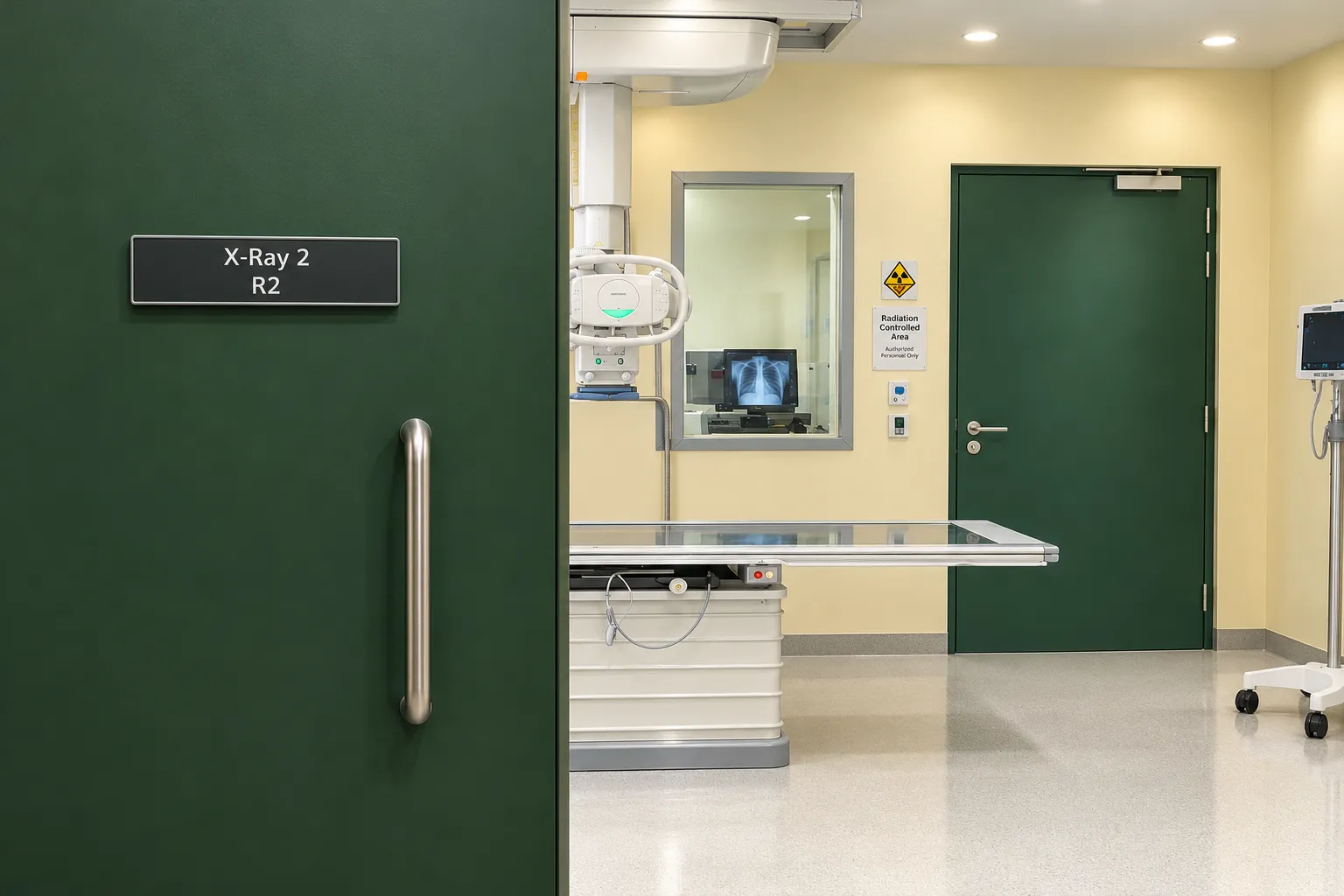
In healthcare facilities and specialised industrial environments, radiation protection is an important part of building safety. Rooms used for X-ray imaging, CT scanning and other radiation-generating equipment may require suitable shielding to help protect patients, healthcare professionals and visitors.
Lead lined steel doors are designed to provide radiation shielding at door openings when incorporated into a properly designed radiation-protection system. They combine a durable steel door structure with a lead lining specified for the project.
What Are Lead Lined Steel Doors?
Lead lined steel doors incorporate a sheet of lead within the door construction to help attenuate X-ray radiation. They are commonly specified for rooms where diagnostic imaging or other radiation-producing equipment is installed.
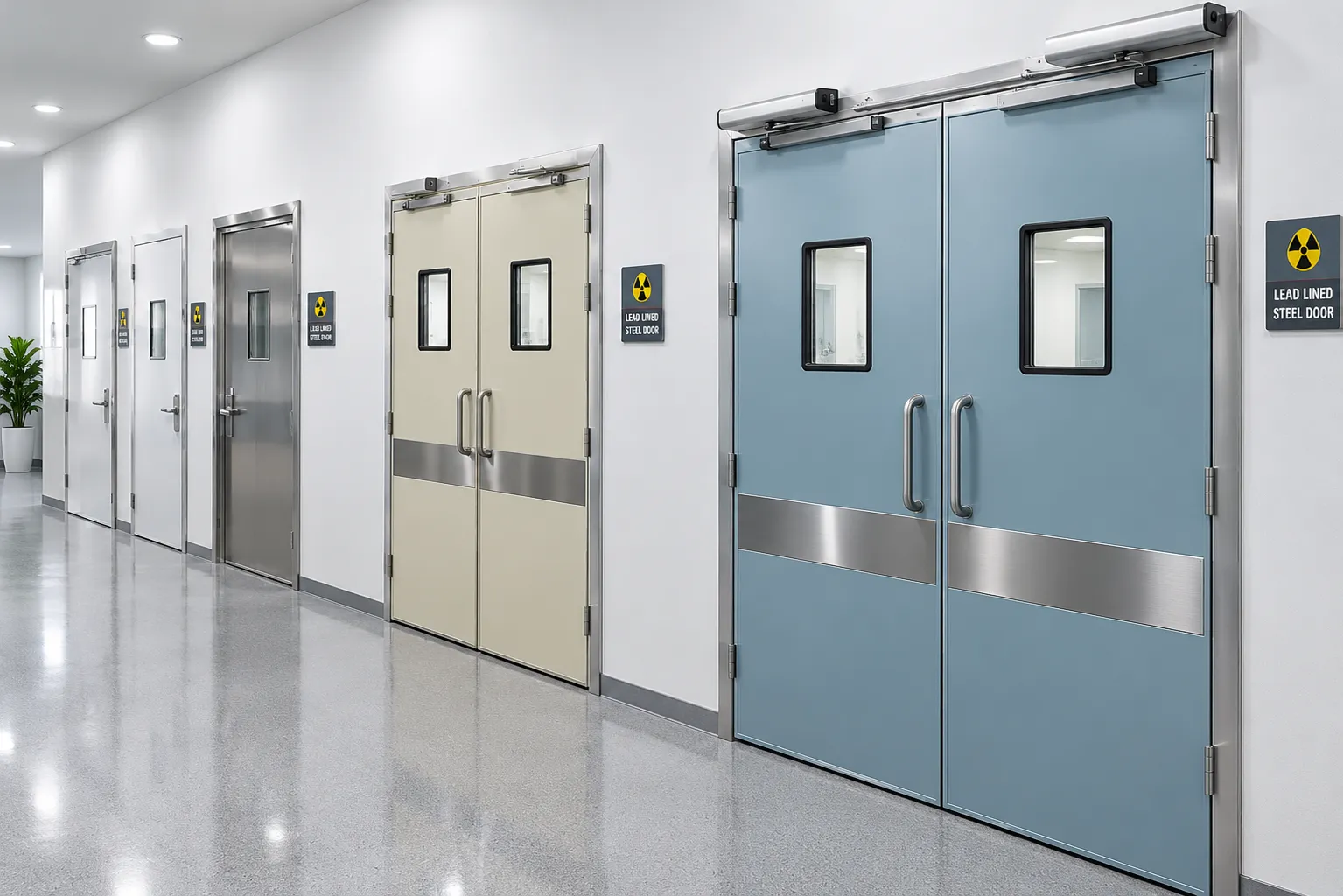
The required lead thickness depends on factors such as radiation energy, equipment workload, room layout, occupancy of adjacent spaces and recommendations from a qualified radiation-protection professional. The door must be considered as part of the complete shielding design, including the frame, joints, surrounding barriers and any vision panels.
Why Are Lead Lined Steel Doors Important?
Radiation Shielding
Lead lining helps attenuate X-ray radiation through the door assembly when correctly specified for the application.
Healthcare Safety
Supports the radiation-protection measures planned for staff, patients and nearby occupied areas.
Steel Construction
A robust door structure suited to regular use, depending on the selected product and installation conditions.
Project-Specific Design
Door size, shielding specification, hardware and finish can be considered against project requirements.
Applications of Lead Lined Steel Doors
Lead lined steel doors may be specified for healthcare and specialist facilities where X-ray shielding is required, including:
- X-ray rooms: Diagnostic imaging rooms in hospitals and clinics.
- CT scan rooms: Imaging facilities requiring shielding around the scanning area.
- Radiology departments: Dedicated imaging areas in hospitals and medical centres.
- Dental X-ray rooms: Dental facilities using X-ray equipment, where shielding is required by the design.
- Research and testing facilities: Certain laboratories and industrial environments using X-ray-generating equipment.
Key Factors to Consider When Selecting a Lead Lined Steel Door
Lead Thickness and Lead Equivalence
The required shielding should be established through the radiation-protection design. Do not select lead thickness using a generic recommendation alone.
Door Frame and Perimeter Protection
The frame, joints and perimeter gaps must be detailed so the completed assembly maintains the required shielding continuity.
Vision Panels
If a vision panel is needed, use suitable radiation-shielding glazing with the specified lead equivalence. Ordinary glass is not a substitute for radiation-shielding glass.
Hardware and Operation
Handles, locks, hinges and closers should be compatible with the door construction, weight and intended frequency of use.
Installation and Verification
Correct installation is essential. The completed room and door assembly should be checked as required by the project’s radiation-protection plan and applicable regulations.
Lead Lined Steel Doors vs. Standard Steel Doors
A standard steel door provides a durable entrance solution, but steel alone should not be assumed to provide the radiation shielding required for an imaging room. A lead lined steel door incorporates a specified shielding layer and is designed to work as part of a complete radiation-protection system.
Discuss Your Project with Arishtha
For projects requiring lead lined doors, the product configuration should be established against the project’s radiation-shielding requirements. When contacting our team, share the following information wherever available:
- Door opening width and height
- Required lead thickness or lead equivalence
- Application and type of imaging equipment
- Requirement for a vision panel
- Preferred finish and hardware
- Project drawings and relevant shielding specifications
Frequently Asked Questions
What is the purpose of a lead lined steel door?
It helps attenuate X-ray radiation through a doorway when designed and installed as part of a suitable radiation-shielding system.
Where are lead lined steel doors used?
They may be used in X-ray rooms, CT scan rooms, radiology departments, dental imaging rooms and certain research or industrial facilities.
How thick should the lead lining be?
The required thickness depends on the radiation source, workload, room layout and shielding calculations. A qualified radiation-protection professional should specify it.
Can a lead lined steel door include a vision panel?
Yes, where the design permits. The glazing must have suitable radiation-shielding properties and specified lead equivalence, with frame details that maintain shielding continuity.
Does a lead lined door alone make an X-ray room safe?
No. It is one component of the room’s radiation-shielding system. The complete room design and installation must be considered and verified as required.
Planning a radiology or diagnostic imaging facility?
Contact Arishtha to discuss your steel door requirements and the technical information needed for your project.
Contact Arishtha Call +91 8939839157